42 silicon bohr diagram
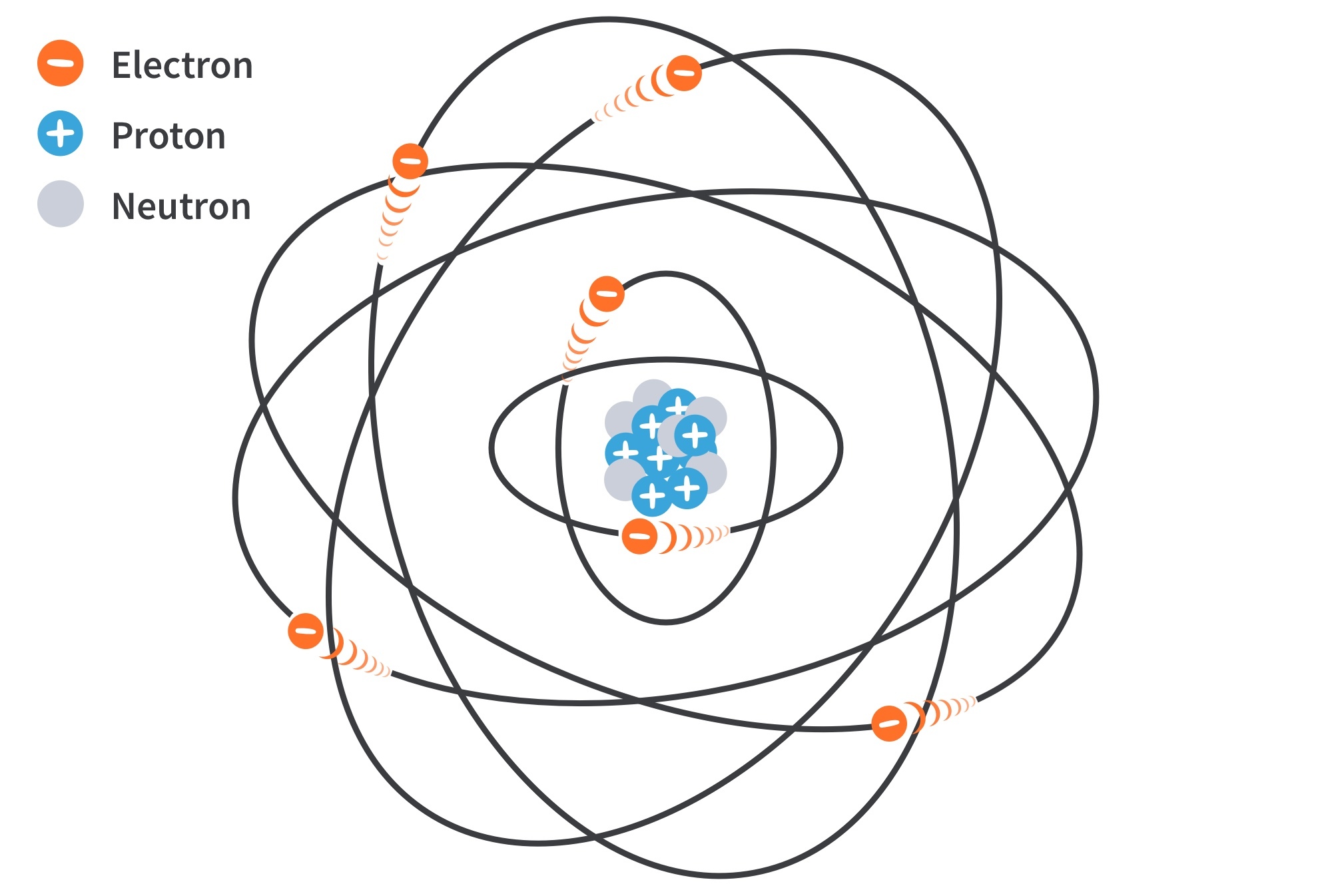
Silicon is a semiconductor and copper is a conductor; Bohr diagrams of the silicon atom and the copper atom are shown in Figure 1-8; Notice that the core of the silicon atom has a net charge of 4 (14 protons 10 electrons) and the core of the copper atom has a net charge of 1 (29 protons 28… a Bohr-Rutherford diagram is used to show the numbers and locations of protons, neutrons, and electrons in an atom step 1 determine the number of protons and neutrons in the atom
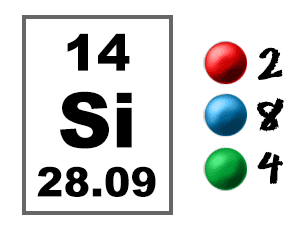
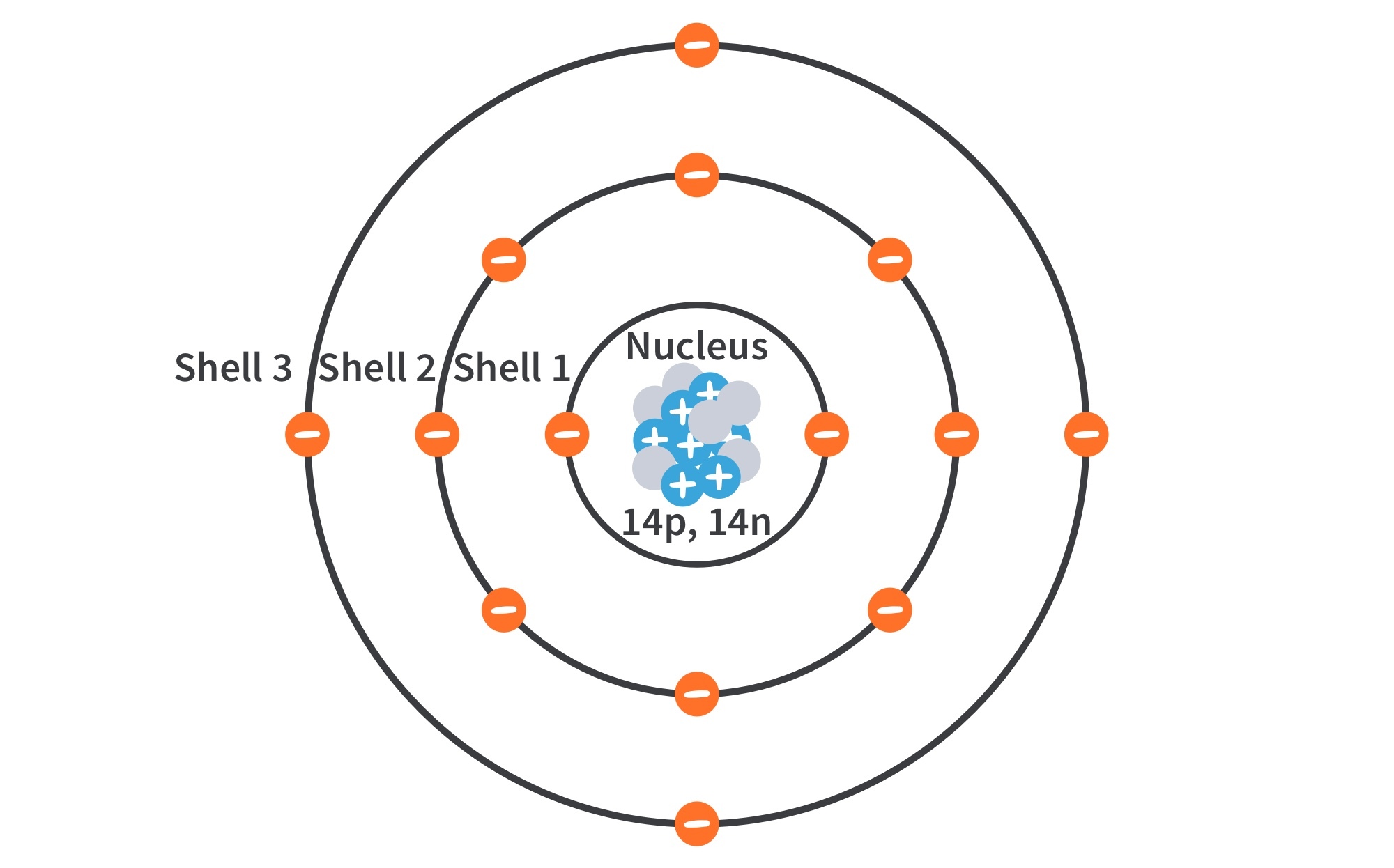
What is the Bohr diagram for silicon? So for the element of SILICON, you already know that the atomic number tells you the number of electrons. That means there are 14 electrons in a silicon atom. Looking at the picture, you can see there are two electrons in shell one, eight in shell two, and four in shell three.

Silicon bohr diagram
Silicon has 2 electrons in its first shell, 8 in its second, 4 in its third.Check me out: http://www.chemistnate.com True or False: The only subatomic particles Bohr Diagrams give information about are the electrons and valence electrons. False. 100. This group/family wants to get rid of its 1 valence electron and would love to bond to group 17/Halogens . ... 44 Oxygen, 12 Silicon, 8 Hydrogen. Click to zoom ... Bohr rutherford diagram for silicon Look at the blackboard. The box on the left contains all the information you need to know about an item. It tells you the mass of an atom, how many pieces there are inside, and where it should be positioned on the periodic table. In the next section we will talk about electrons or electrons or electrons.
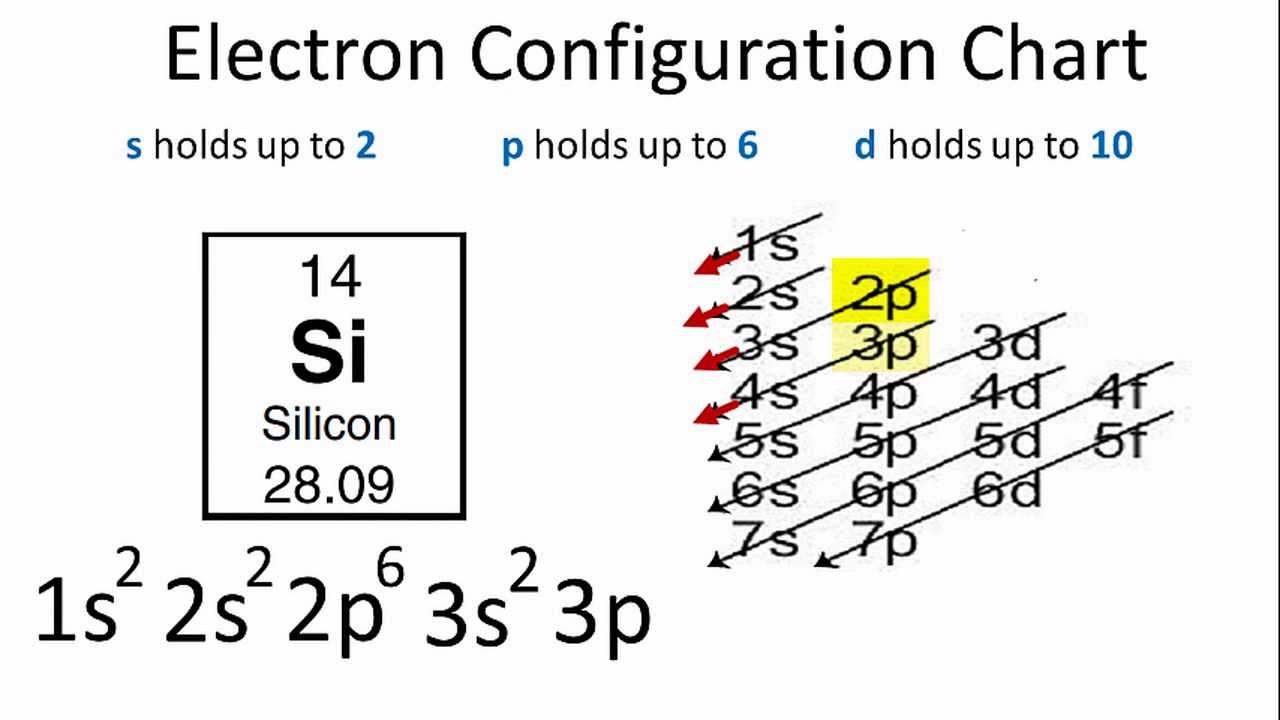
Silicon bohr diagram. Argon Bohr Model — Diagram, Steps To Draw. Argon is a group 18th element having atomic number 18. It is denoted by the symbol Ar and is a noble gas. It is also the third most abundant gas present in the atmosphere of the earth. Around 1.288% by mass of argon is present in the air, which can be isolated through fractional distillation. Draw a BohrRutherford diagram of a Silicon atom. 2. Draw a BohrRutherford diagram of a Nitrogen ion. 1.17 Compounds with Bohr Diagrams (part).notebook 2 October 16, 2019 Compounds (or a use for these diagrams we've been drawing) 1.17 Compounds with Bohr Diagrams (part).notebook 3 October 16, 2019 ... Bohr's diagram of Nitrogen has only two electron shells (K and L), the inner shell is K-shell and the outermost shell is L-shell. Hence, the electrons found in the L-shell of the Nitrogen atom are its valence electrons because it is the outermost shell that also called the valence shell. Orbital diagram for silicon (Si) Silicon (Si) excited state electron configuration Atoms can jump from one orbital to another by excited state. This is called quantum jump. Ground state electron configuration of silicon is 1s2 2s2 2p6 3s2 3p2. The valency of the element is determined by electron configuration in the excited state.
Silicon Bohr Model: Diagram, Steps To Draw Silicon is a group 14 element and is denoted by the symbol Si. It has a high affinity towards oxygen due to which it rarely occurs in its pure form in nature. It is a metalloid and a non-metal. It is the second most abundant mineral found on the earth's surface. Bohr Diagrams Directions: I. Draw a Bohr Diagram for each element. 2. Write the atomic number in the top right corner of each box. 3. Write the element symbol inside of the nucleus. 4. Add energy levels (shells) and electrons for each element. O 2 Neon o D Pcs Sol 60T What is the Bohr's diagram? Bohr diagrams show electrons orbiting the nucleus of an atom somewhat like planets orbit around the sun. In the Bohr model, electrons are pictured as traveling in circles at different shells, depending on which element you have. ... The first three are metallic, silicon is giant covalent, and the rest are simple ... Name: Silicon Symbol: Si Atomic Number: 14 Atomic Mass: 28.0855 amu Melting Point: 1410.0 °C (1683.15 K, 2570.0 °F) Boiling Point: 2355.0 °C (2628.15 K, 4271.0 °F) Number of Protons/Electrons: 14 Number of Neutrons: 14 Classification: Metalloid Crystal Structure: Cubic Density @ 293 K: 2.329 g/cm 3 Color: grey Atomic Structure
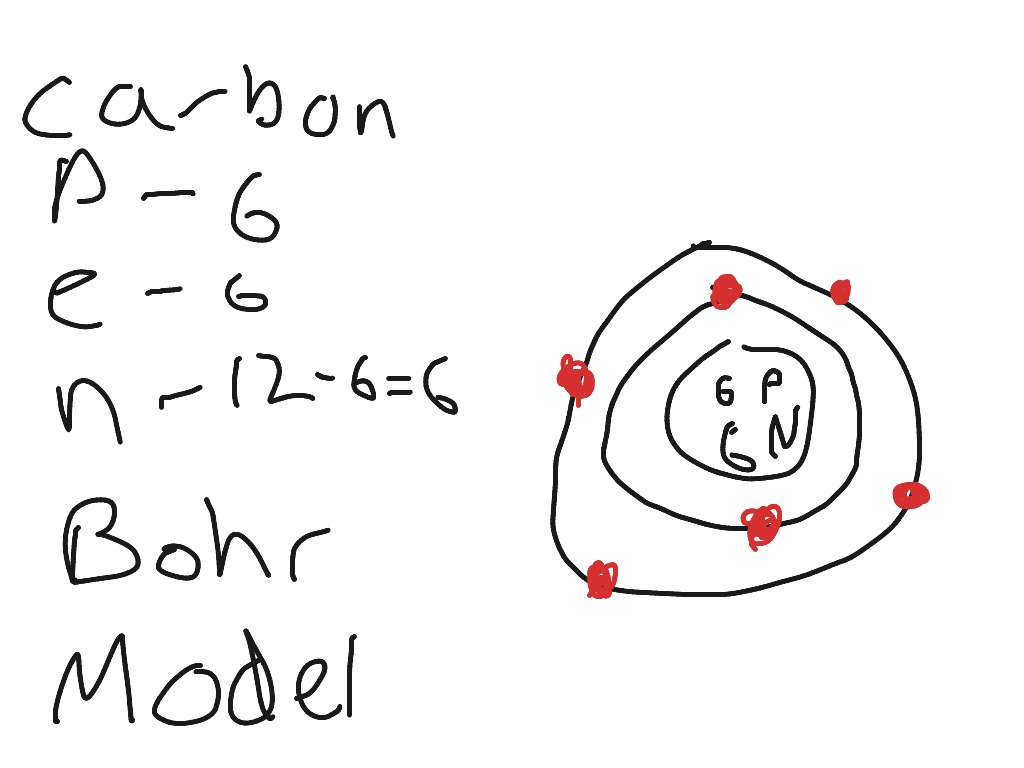
Bohr Diagrams 1) Check your work. 2) You should have 6 total electrons for Carbon. 3) Only two electrons can fit in the 1st shell. 4) The 2nd shell can hold up to 8 electrons. 5) The 3rd shell can hold 18, but the elements in the first few periods only use 8 electrons. 6p 6n What is Bohr diagram? Bohr diagrams show electrons orbiting the nucleus of an atom somewhat like planets orbit around the sun. In the Bohr model, electrons are pictured as traveling in circles at different shells, depending on which element you have. How do you make an energy diagram? Explanation: Draw and label a pair of axes. Bohr diagrams show electrons orbiting the nucleus of an atom In the Bohr model, electrons are pictured as traveling in circles at different shells, Each element, when electrically neutral, has a number of electrons For example, the 1n shell represents the first energy level located closest to the nucleus.Now offering rare physics books for sale ... 1922 Niels Bohr proposed an atomic structure theory that stated the outer orbit of an atom could hold more electrons than the inner orbit. Nucleus consists of Protons and Neutrons together called Nucleons. Diagram Of Phosphorus Atom Atom Diagram Atom Model Atom Model Project Mass Number 40. Diagram of atom structure. Atomic number 20. Radius […]

Chemical Elements.com - Silicon (Si)
Bohr's diagram of Silicon has three electron shells (K, L, and M), the inner shell is K-shell and the outermost shell is M-shell. Hence, the electrons found in the M-shell of the Silicon atom are its valence electrons because it is the outermost shell that also called the valence shell.

BohrModelPractice
Bohr Diagram: The First Element. In order to make a Bohr diagram, you need to know the number of protons, neutrons, and electrons the element has. In this section, we'll show a sample Bohr diagram for hydrogen. H —Hydrogen. 1 proton. 1 electron. 0 neutrons

Atomic Structure. It used to be thought that atoms were small ...
Bohr model of Nitrogen (N) 2, 5: 8: Bohr model of Oxygen (O) 2, 6: 9: Bohr model of Fluorine (F) 2, 7: 10: Bohr model of Neon (Ne) 2, 8: 11: Bohr model of Sodium (Na) 2, 8, 1: 12: Bohr model of Magnesium (Mg) 2, 8, 2: 13: Bohr model of Aluminum (Al) 2, 8, 3: 14: Bohr model of Silicon (Si) 2, 8, 4: 15: Bohr model of Phosphorus (P) 2, 8, 5: 16 ...

Bohr Model Atomic Number Silicon Chemical Element, PNG ...
What is the Bohr diagram for magnesium? Magnesium has 12 protons and 12 electrons. The first electron shell of a Bohr model holds 2 electrons. The second holds 8 . The remaining 2 are placed in the third electron shell, which is full when it holds 8 electrons.

Silicon (Si)
Answer the following questions about SiS 2. Draw a Bohr-Rutherford diagram of non-bonding silicon, showing all electrons (core electrons and valence electrons) Draw a Bohr-Rutherford diagram of non-bonding sulfur, showing all electrons (core electrons and valence electrons) Draw a molecule of SiS 2, using Bohr-Rutherford diagrams showing all ...

Atom Lewis structure Bohr model Depleted uranium Diagram ...
Bohr Diagram Of Sodium Atom Diagram Atom Model Atom Model Project . The average size of an atom is about 100 picometers or one ten-billionth of a meter. Diagram of the atom. The outermost regions of the atom are called electron shells and contain the electrons negatively charged. The center of an atom is the nucleus that contain protons and ...

Semiconductor physics review: Atomic models
The bohr diagram. it was a planetary model with the nucleus and the electrons floating around it Can you draw a bohr model of silicon? No, the atomic model by Niels Bohr is only applicable to atoms...

Comparison of a Semiconductor Atom to a Conductor Atom ...
Bohr rutherford diagram for silicon Look at the blackboard. The box on the left contains all the information you need to know about an item. It tells you the mass of an atom, how many pieces there are inside, and where it should be positioned on the periodic table. In the next section we will talk about electrons or electrons or electrons.
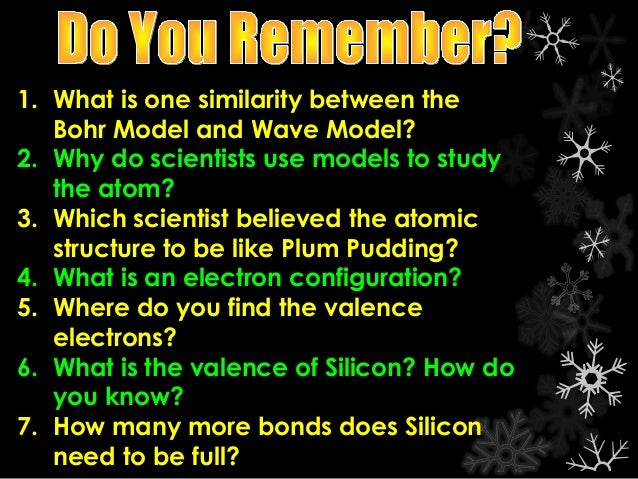
Bohr Model - Day 2
True or False: The only subatomic particles Bohr Diagrams give information about are the electrons and valence electrons. False. 100. This group/family wants to get rid of its 1 valence electron and would love to bond to group 17/Halogens . ... 44 Oxygen, 12 Silicon, 8 Hydrogen. Click to zoom ...

How to Draw the Bohr-Rutherford Diagram of Silicon
Silicon has 2 electrons in its first shell, 8 in its second, 4 in its third.Check me out: http://www.chemistnate.com

Bohr model Atomic number Silicon Chemical element, kiss.com ...

Silicon 3D Bohr model | Atom model project, Bohr model, Atom ...

Bohr model Silicon Diagram Electron Symbol, symbol, chemical ...

Bohr model Atomic number Silicon Chemical element, kiss.com ...

Electromagnetic Spectrum - ppt download

Bohr Model of Silicon.

Silicon (Si)

Solved Figure Ql(a) shows the Bohr model of a silicon atom ...

Silicon - Key Stage Wiki

Silicon Bohr Model - How to draw Bohr diagram for Silicon (Si ...
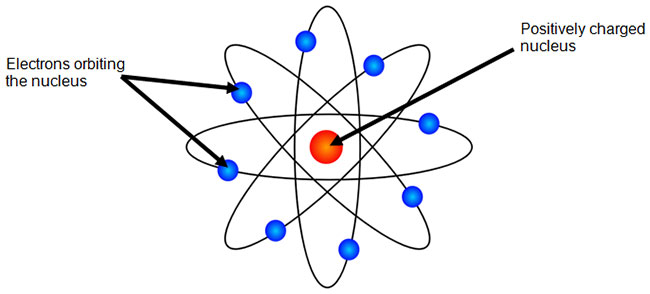
The Bohr Model | Texas Gateway

This Shows The Bond Of Silicon Oxide Using The Bohr - Carbon ...
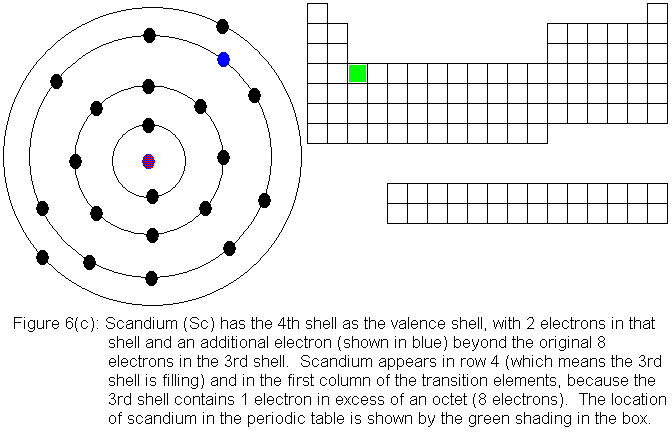
Electronic Structure and Chemical Bonding
Chem4Kids.com: Silicon: Orbital and Bonding Info

Silicon atom Images, Stock Photos & Vectors | Shutterstock

Bohr Models | Chemistry - Quizizz

Basic Information - Butler Elements
Carbon Bohr model | Science | ShowMe

1,212 BEST Silicon Atom IMAGES, STOCK PHOTOS & VECTORS ...

23: Bohr model of magnesium atom (left) and number of ...
Introduction to Electronics - Study Guides | CircuitBread

Silicon and Germanium

Bohr-Rutherford Diagrams & Lewis Dot Diagrams - Eve ...

This Shows The Bond Of Silicon Oxide Using The Bohr - Carbon ...
Silicon Electron Configuration (Si) with Orbital Diagram

Silicon Bohr Model: Diagram, Steps To Draw - Techiescientist
Introduction to Electronics - Study Guides | CircuitBread

Silicon atom Images, Stock Photos & Vectors | Shutterstock

bohr model of the silicon atom. electron - Royalty Free Stock ...

Pin by kiki on Electronics need | Atom model, Atom diagram ...

Table Cartoon png download - 508*508 - Free Transparent Bohr ...

Silicon(Si) electron configuration and orbital diagram


Comments
Post a Comment