41 fluorine orbital diagram
In the molecular orbital theory, bond length, bond strength, bond order, and magnetic properties of different molecules plays an important role. Bond order is just several electrons that are present between two atoms. One can calculate the bond order of any molecule by creating a molecular orbital diagram like calculate the bond order in h−2.. To create the molecular diagram, you can start ... (B, D, F, and H) Standard deviations (SDs) calculated for the same variables considering the seven 1120-ppm orbital simulations. SDs have the same unit as their corresponding variable except for the MAP (expressed in % of variation compared to the average MAP) and the biome variability, which is unitless.
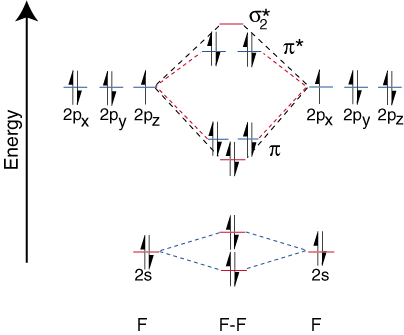
The lower energy molecular orbital is the bonding and the higher energy is the anti-bonding orbital. The below-mentioned diagram gives us the individual MO diagrams of Oxygen and Fluorine separately, the atoms that make up a molecule of OF2.
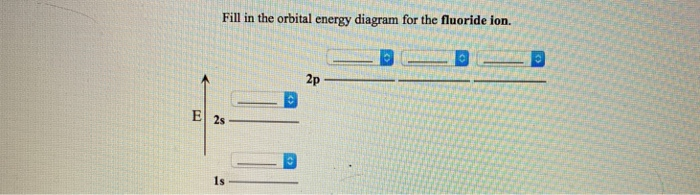
Fluorine orbital diagram
What is the Orbital Diagram For Nitrogen? When we talk about the orbital diagram, we first need to understand what exactly it means. Therefore, during exams, the student can expect questions related to this topic so it is important that the students must go through it. SF2 has a simple Lewis structure in which the Sulphur atom is in the centre forming single bonds with both the Fluorine atoms. There are two lone pairs of electrons on the Sulphur atom which makes the geometry of the molecule bent. The Sulphur atom has sp3 Hybridization, and the bond angle of F-S-F is 98 degrees. In the case of a fluorine molecule has a total of 18 electrons and out of which 14 electrons are valence electrons. When we make the molecular orbital energy level diagram of f2 molecule then, we will get this configuration: 1σs 2, 1σ*s 2, 2σs 2, 2σ* 2, σ2pz 2, π2p x 2, π2p y 2, πp x * 2, π2p y * 2. From this electronic configuration ...
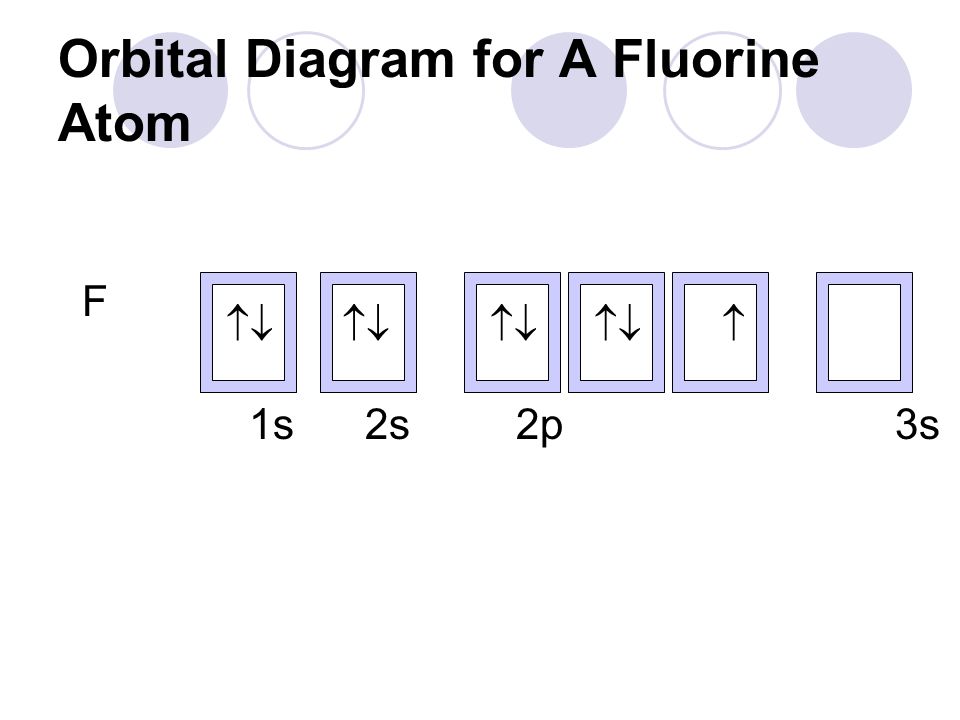
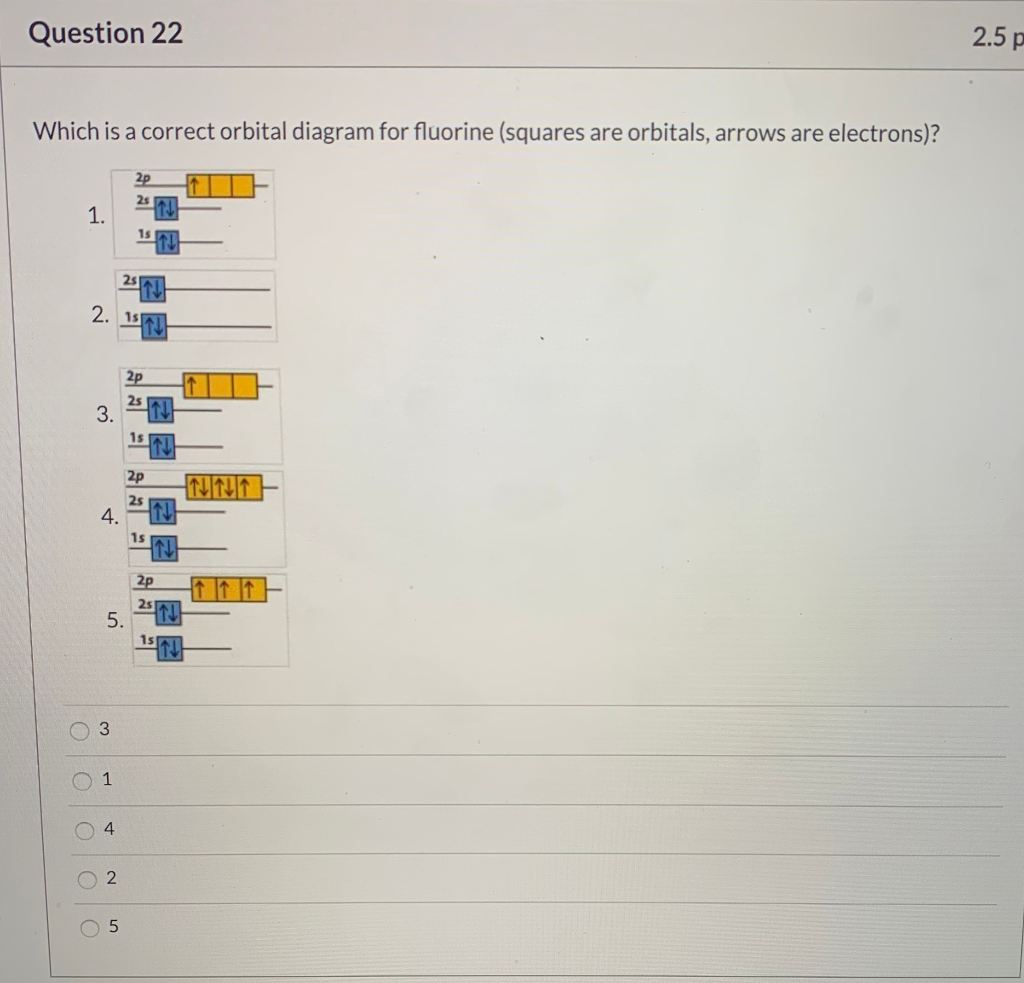
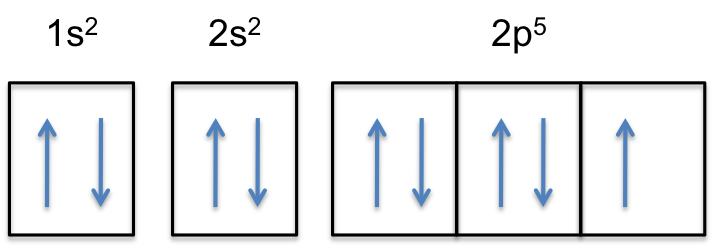
Fluorine orbital diagram. Electron Configuration Chart of All Elements (Full Chart) June 10, 2021 March 7, 2021 by Admin. Electron configuration chart of all Elements is mentioned in the table below. The Shorthand electron configuration (or Noble gas configuration) as well as Full electron configuration is also mentioned in the table. Atomic no. In an orbital diagram, orbitals are represented as boxes and electrons are represented by arrows (↑ or ↓), with two electrons occupying each orbital/box. Orbitals are labeled according to their principle energy levels and sublevels (1s, 2p, etc..). Helium, with two electrons in the 1s orbital has the following orbital diagram. 8 - Drawing Molecular Orbital Diagrams. Abstract (TL;DR) Molecular orbital diagrams are a fantastic way of visualizing how molecular orbitals form using what we already understand about sigma and pi bonds. Depending on if it is a homonuclear case, where the bonding atoms are the same, or a heteronuclear case, where the bonding atoms are ... F: 1s2 2s2 2p5 F: [He] 2s2 2p5. Br: 1s2 2s2 2p6 3s2 3p6 4s2 3d10 4p5 Br: [Ar] 4s2 3d10 4p5. When we are looking at the bond formation of Br with each of the fluorine atoms, the paired electrons will shift to fill up the 4d orbital. Thus we have the one s orbital, px, py, and pz orbitals and one d orbital( dxy for example)
Fluorine Electron Configuration (F) with Orbital Diagram January 21, 2021 Leave a Comment Fluorine Electron Configuration : Electron configuration is an important theorem of science and if we talk about this electron configuration in quantum chemistry or atomic physics then we would find a simple understanding of it. I'm an 11th grader and I'm really confused on which atoms can make more than 4 bonds. For example in the class work there's a question that asks the structure of xenon tetrafluoride and my chemistry teacher said it can go up to 12 electrons. I understand that hybridization has something to do with it, but my teacher didn't explain it well. When we draw the Lewis structure, the best structure is the one where S has the negative formal charge and each fluorine is singly bonded to the sulfur. So in my tutorial question, we are asked to draw the valence orbital diagram for F, S, S-, S*- and S hyb. So for F and S it's just the normal case. But for S-, isn't this assuming that sulfur has the negative ionic charge? I thought all it has is a negative formal charge where the formal charge does not indicate the presence of a negative ioni... The electron configuration of a Phosphorus atom in its ground state is 1s2 2s2 2p6 3s2 3p3, but when it is in an excited state, the electrons from 3s orbital get unpaired. There are five half-filled orbitals: one s orbital, three p orbitals, and one d orbital. All these five orbitals accommodate one valence electron of the Fluorine atoms.
I'm not sure what my Professor means when he says "Draw the orbital diagram for the hybridized Xe atom in a molecule of XeF4." and "Draw the orbital diagram for one of the fluorine atoms in a molecule of XeF4." I think i'm just confused by the wording because it seems easy but i have no idea. Could you guys explain this to me in another way? Thank you. I've been brooding on some MO theory concepts that my inorganic chemistry class has absolutely failed to address. I've spent the last week obsessively looking for answers to these questions to no avail. **Questions**: 1. How can both 1s(sigma) bonding and antibonding orbitals coexist? How about 2p(pi) bonding/antibonding coexisting? I don't understand the physical/spacial manifestation of both the bonding and antibonding orbitals being filled at the same time. I would prefer a drawing or... Here's the question >Paramagnetic materials have unpaired electrons and are weakly attracted by magnetic fields, whereas diamagnetic materials have no unpaired electrons and are weakly repelled by such fields. By considering the molecular orbital diagram of the “diatomic” molecules below, determine which are paramagnetic. The options are then diatomic boron, carbon, nitrogen, oxygen, and fluorine. The problem is that I have no idea how to tell if something has unpaired electrons. My und... Arrange the following in order of decreasing stability. a blank molecular orbital diagram (part a 1 figure) has been provided to you. rank the fluorine species from most to least stable. to rank items as equivalent, overlap them. f2, f2+, f2-
Solved Fill In The Orbital Energy Diagram For The Fluoride Chegg Com
Atomic number (Z) of fluorine is 9 and its orbital electronic configuration is 1s 2 2s 2 2p 2 x, 2p 2 y, 2p 1 z. Thus, a fluorine atom has one half-filled atomic orbital. Therefore, two atoms of fluorine combine to form the fluorine molecule as a result of the combination for their half-filled atomic orbitals shown in Fig.
1
Subkulit s = 1 orbital maksimal berisi 2 elektron Subkulit p = 3 orbital maksimal berisi 6 elektron Subkulit d = 5 orbital maksimal berisi 10 elektron Subkulit f = 7 orbital maksimal berisi 14 elektron. Diagram tingkat energi menurut asas aufbau: 1s 2s 2p 3s 3p 4s 3d 4d 5s 4d 5p 6s 4f 5d 6p 7s 5f 6d 7p. Asas larangan Pauli

Write Orbital Diagram To Represent The Ele Clutch Prep
In my review sheet for bonding it says "Draw the orbital diagram for one of the fluorine atoms in a molecule of XeF4.". Do i just draw the diagram for the un-bonded Fluorine atom? Is it the same thing as drawing the diagram for a bonded Fluorine atom? If not, how would i write/draw the bonded Fluorine atom in XeF4?
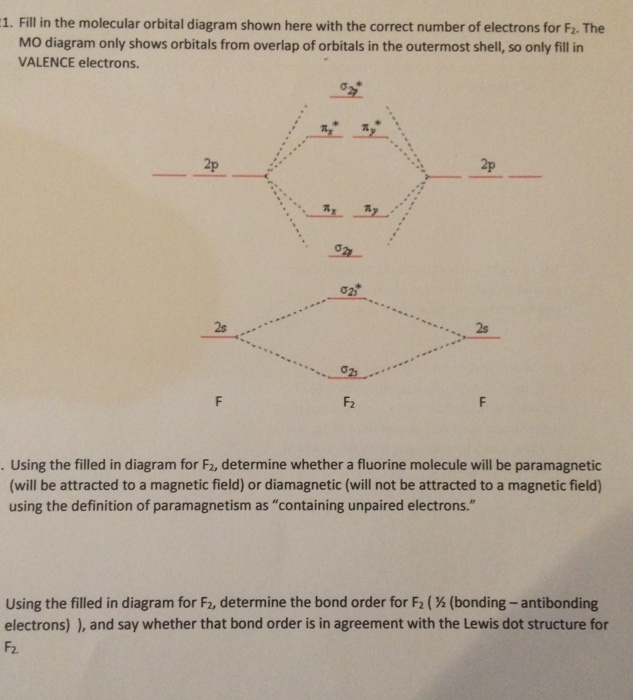
Solved 1 Fill In The Molecular Orbital Diagram Shown Here Chegg Com
Valence electrons in Fluorine (F) 7: 10: Valence electrons in Neon (Ne) 8: 11: Valence electrons in Sodium (Na) 1: 12: Valence electrons in Magnesium (Mg) 2: 13: Valence electrons in Aluminum (Al) 3: 14: Valence electrons in Silicon (Si) 4: 15: Valence electrons in Phosphorus (P) 5: 16: Valence electrons in Sulfur (S) 6: 17: Valence electrons ...
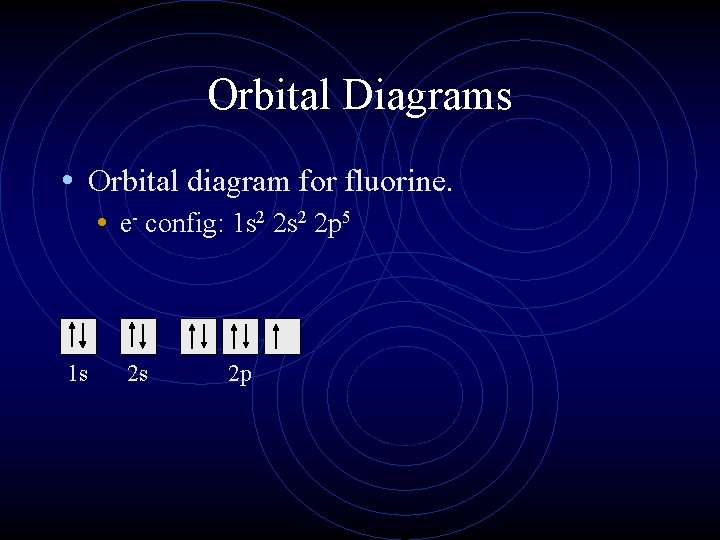
Hunds Rule Orbital Diagrams And Valence Electrons The
The XeF4 or Xenon Tetrafluoride is a chemical compound made of Xenon and Fluoride atoms. It is the world's first binary compound discovered. It is a type of noble gas having the chemical equation of. Xe +2 F2 -> XeF4. The XeF4 has a solid white appearance and has a density of 4.040 g cm−3 in a solid form.

Write The Full Orbital Diagram For Fluorine Study Com
Orbital diagram of Nitrogen (N) 8. Orbital diagram of Oxygen (O) 9. Orbital diagram of Fluorine (F) 10. Orbital diagram of Neon (Ne) 11. Orbital diagram of Sodium (Na)
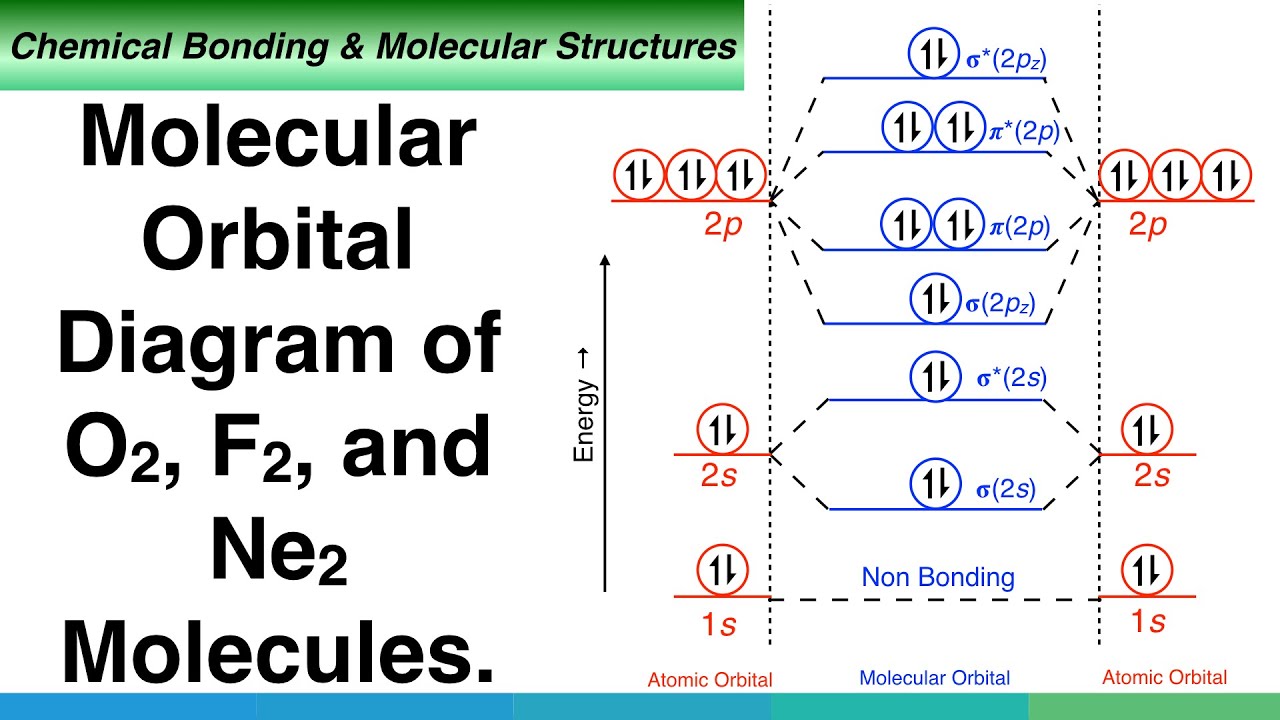
Molecular Orbital Diagram Of O2 F2 And Ne2 Molecules Youtube
Bohr diagram is very interesting and easy to draw. 1s2,2s2,2p5 or he 2s2 2p5 valence electrons: The symbol for fluorine is f. The electron configuration of fluorine (f) and the orbital diagram is the main topic of this article. Prezentováno Energy Level Ck 12 Foundation I show you where fluorine is on the periodic table and how to determine.
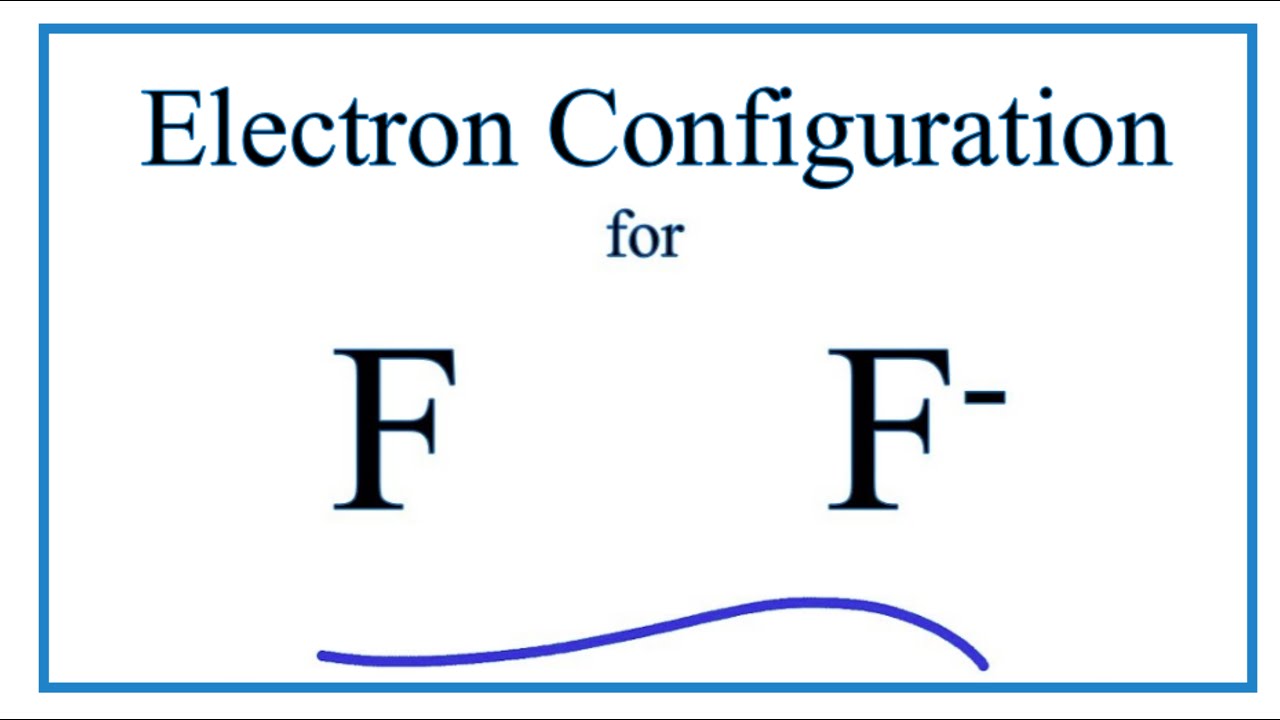
F Electron Configuration Fluoride Ion Youtube
Carbon Electron Dot Diagram. If we talked about the electronic configuration of the element then, carbon is an element whose electronic configuration is given as 1s22s22p2. Now the main thing here is what electronic configuration actually means, so the solution/ answer is that in simple words, by knowing the electronic configuration of any ...

Electron Arrangement In Atoms Ck 12 Foundation
XeF2 Lewis Structure, Molecular Geometry, Hybridization, and MO Diagram. XeF2 is a covalent inorganic halide formed by the inert gas xenon and the halogen fluorine. This is an active solvent and is found to be soluble in different fluorides like HF and bromine pentafluoride. If we look at the process of synthesis of xenon difluoride, here's ...
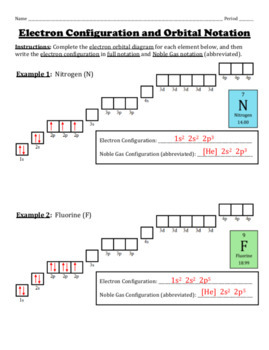
Electron Configuration And Orbital Diagrams Worksheet By Chemistry Wiz
Sulfur Tetrafluoride has 34 valence electrons, out of which it forms four covalent bonds and one lone pair of electrons on the central atom in its Lewis structure. There are three lone pairs on each fluorine atom. It has a molecular geometry of the formula AX4E; it forms a see-saw shape and has a trigonal bipyramidal molecular geometry. SF4 has ...

Orbital Diagrams Rules Principles Quiz Quizizz
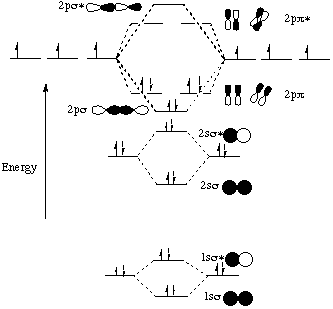
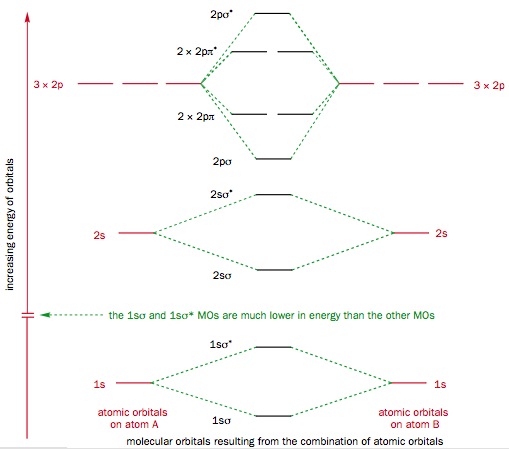
F2 Molecular Orbital (MO) Diagram. As per molecular orbital (MO) theory, all the constituent atoms in a molecule contribute to the formation of molecular orbitals. These MOs are a linear combination of the atomic orbitals. Thus, the electrons in a molecule are not individually assigned to atomic orbitals but to molecular orbitals.
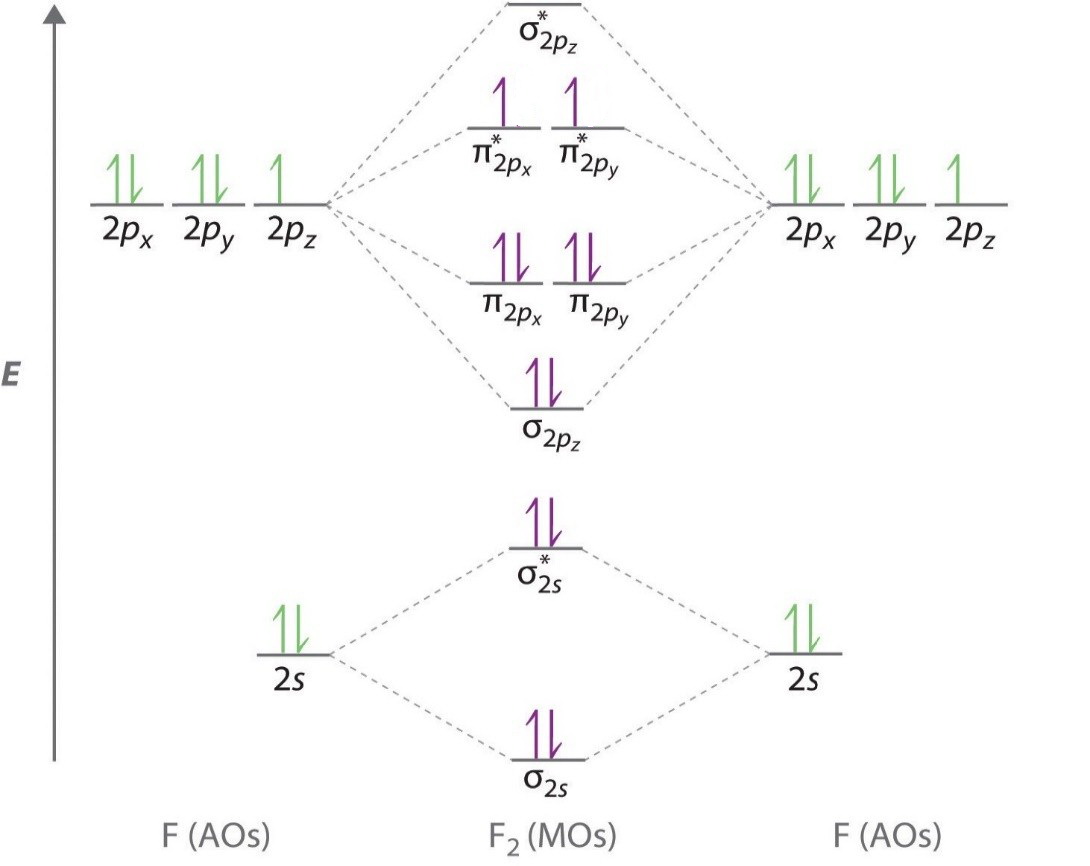
What Charge Would Be Needed On F2 To Generate An Ion With A Bond Order Of 2 Socratic
Both Fluorine atoms are pushed downwards by Sulfur's lone pairs which give us a bond angle varying between 180 degrees to 98 degrees. MO Diagram of SF2. MO diagrams are a good way to represent the different properties of a compound. These properties include shape, bond energy, bond angle, and more such things.
What Is The Molecular Orbital Diagram For Hcl Quora
I'm doing a question that generally asks why SF6 exists, but OF6 doesn't. Now I've already used the VB theory to explain this so that's fine. I want to use the MO theory to explain it as well. I can easily find MO diagrams for SF6, but I can't find any for OF6, now you could say I draw the diagram, however I only have the knowledge right now to make a diagram up to a heteronuclear tetratomic molecule (e.g. BH3). Is there anywhere I can find the MO diagram? I apologise in advance if this is vi...
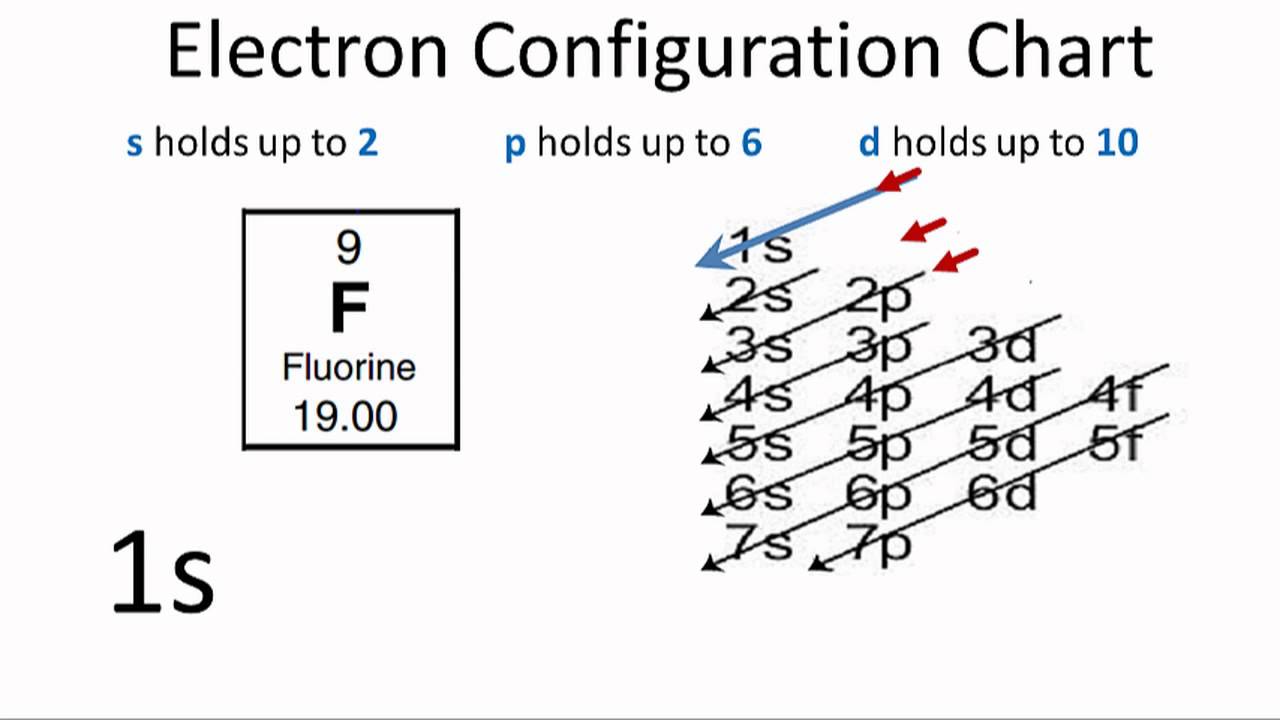
Fluorine Electron Configuration Youtube
Molecular Orbital Theory An approach, known as Molecular Orbital Theory, was established primarily by Hund and Mulliken in \(1932\) to explain the features of molecules such as their relative bond strengths, paramagnetic and diamagnetic properties, etc.

Solved For The Elements Fluorine And Calcium Answer The Following Questions Complete The Following Table Protons Neulrons Electrons Fluorine 19 20 Ca Give The Full Electron Configuration Also Give The Orbital Diagram The One
Version 2.0 and Part 7 of "Utopian Religion", "Utopia", or "Vispthinkingpat, Thinkflexsense, and Soundpat Religion" &#x200B; # Efficient vispthinkingpat combination of English language, numerical list format, and logic language or Vispenlogist Language: * Listology <-> List-types-ology <-> Indented-list-ology and Non-indented-list-ology and Numerically-ordered-list-ology and Bulletpoint-ordered-list-ology and Vispenlogistology * Combatology <-> Shield-from-enemy-ology...

Fluorine F Electron Configuration With Full Orbital Diagram
The electron configuration of fluorine(f) and the orbital diagram is the main topic of this article. The content that follows is the substance of general chemistry lecture 26. Protons and neutrons in boron. The attraction between this lone valence electron and the nucleus with 11 protons is shielded by the other 10 core electrons.
1
Fluorine does have a higher oxidative capacity, and it forces bromine to promote electrons. With this, Bromine can use the D-Orbitals for hybridization that is useful for identifying the geometry of the bond pairs. Molecular Orbital Diagram. The molecular orbital diagram describes the location and behavior of electrons in molecules.

What Is The Orbital Diagram For Fluorine Study Com
Question from my chem practice. **Using an MO energy level diagram, would you expect F2 to have a lower or higher first ionization energy than atomic fluorine? Why? Practice Would be lower than F atoms since the HOMO is the pi\* orbital.** So looking at the electron configuration, I thought it'd easier to ionize from F because if you ionize 1 electron from its orbital, it's more stable with the empty orbital. Whereas when you remove one electron from an F2, you're disrupting an electron pai...
What Is The Molecular Orbital Diagram Of O2 And F2 Quora
An s orbital is spherical with its centre at the nucleus. Thus a 1s electron is almost entirely confined to a spherical region close to the nucleus; a 2s electron is restricted to a somewhat larger sphere. What is the orbital diagram for sulfur? The p orbital can hold up to six electrons.
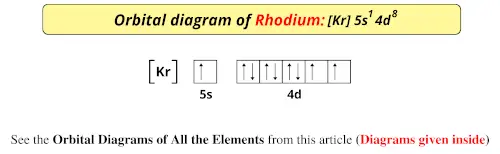
Orbital Diagram Of All Elements Diagrams Given Inside
15 F2 Molecular Orbital Diagram. We assume that the electrons would fill the molecular orbitals of molecules like electrons fill atomic we will use this diagram to describe o2, f2, ne2, co, and no. The lowest energy unoccupied molecular orbital is 2p_ (sigma), so that is where the extra electron will be added.

Solved Diagram 9 1 The Molecular Orbital Diagram Below May Chegg Com
In the case of a fluorine molecule has a total of 18 electrons and out of which 14 electrons are valence electrons. When we make the molecular orbital energy level diagram of f2 molecule then, we will get this configuration: 1σs 2, 1σ*s 2, 2σs 2, 2σ* 2, σ2pz 2, π2p x 2, π2p y 2, πp x * 2, π2p y * 2. From this electronic configuration ...

Orbitals Of Lithium Fluorine And Phosphorus Download Scientific Diagram
SF2 has a simple Lewis structure in which the Sulphur atom is in the centre forming single bonds with both the Fluorine atoms. There are two lone pairs of electrons on the Sulphur atom which makes the geometry of the molecule bent. The Sulphur atom has sp3 Hybridization, and the bond angle of F-S-F is 98 degrees.
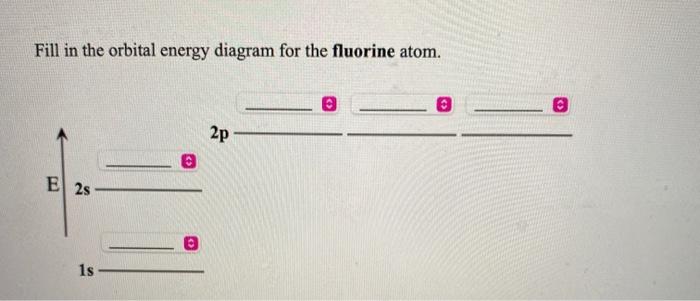
Solved Fill In The Orbital Energy Diagram For The Fluorine Chegg Com
What is the Orbital Diagram For Nitrogen? When we talk about the orbital diagram, we first need to understand what exactly it means. Therefore, during exams, the student can expect questions related to this topic so it is important that the students must go through it.
1
The Crossover

Write Orbital Diagram To Represent The Ele Clutch Prep
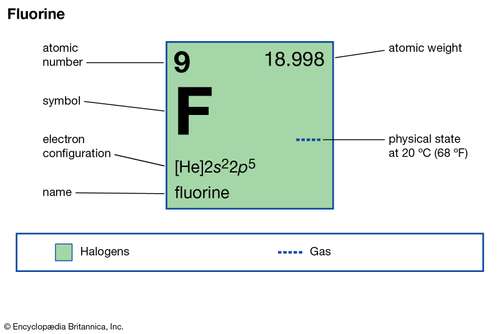
Fluorine Valence Electrons Fluorine Valency F With Dot Diagram

Question Db9e4 Socratic

D Draw Orbital Diagrams Of A Fluorine Molecule B Hydrogen Fluoxide Molecule
The Atom Ppt Video Online Download

Webelements Periodic Table Fluorine Properties Of Free Atoms

Electron Configurations
Molecular Orbitals Molecular Orbital Theory Sparknotes
Solved Question 22 2 5 P Which Is A Correct Orbital Diagram Chegg Com

The Molecular Orbital Diagram Of Fluorine Youtube

Construct The Orbital Diagram Of The F Io Clutch Prep

Molecular Orbital Diagram Difluorine Png 1024x532px Diagram Area Atomic Orbital Diatomic Molecule Dioxygen Difluoride Download Free
Molecular Orbitals In Fluorine

Webelements Periodic Table Fluorine Properties Of Free Atoms

Qualitative Molecular Orbital Diagram Of Hf The 2s Orbital Coming Download Scientific Diagram
What Is The Electron Configuration Of F Socratic


Comments
Post a Comment